
When people talk about engine maintenance, attention usually falls on oil, spark plugs, or coolant. Yet a component as simple as an air filter can have a considerable impact on fuel consumption, performance, and even engine longevity. This cylinder or pleated panel, often hidden under a plastic cover, is the only barrier between outside air and your engine’s internal components. And yet, how many drivers think to check it between services? This discreet component deserves far more attention than it typically receives in routine maintenance.
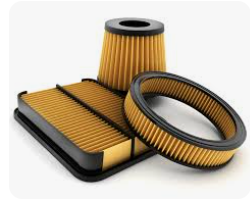
The Fundamental Role of the Air Filter
The role of the air filter is simple to understand but fundamental to engine mechanics. To burn fuel correctly, an engine needs clean air, in large quantities and at a constant flow rate. A standard engine draws in roughly ten thousand litres of air for every litre of gasoline consumed. Multiply that figure by the thousands of kilometres driven each year, and you understand why the air filter progressively accumulates dust, pollen, insects, and urban particles. Without it, all of these elements would end up scratching the cylinders and clogging the valves, significantly reducing engine longevity and increasing the risk of costly breakdowns.
Fuel Economy and Power: Effects of a Clogged Filter
A clean air filter allows air to flow freely to the combustion chambers. When the filter becomes clogged, the engine must work harder to draw in the air it needs. This restriction creates an abnormal vacuum, disrupts the air-fuel mixture, and forces the engine management system to inject more fuel to compensate. The result: fuel consumption increases, sometimes significantly. On certain vehicles, a saturated filter can cause a noticeable loss of power, especially during acceleration or on hills. Lab calculations show that a very dirty filter can raise fuel consumption by several percent on an urban cycle.
When Should You Change Your Filter?
Replacement frequency depends heavily on your daily driving conditions. A city driver stuck in dense traffic, someone who regularly drives on dusty roads, or a resident of a heavily polluted area will need to change their filter much more often than a driver who mainly travels on rural highways. As a general rule, a visual check every 10,000 kilometres is a good habit, with a full replacement every 20,000 to 30,000 kilometres depending on the filter’s condition. Construction sites, roadworks, and driving on unpaved tracks also accelerate the filter’s fouling.
How to Recognize a Worn-Out Filter
Recognizing a worn-out filter requires no special tools. A simple visual inspection is usually sufficient. A new filter is generally white, beige, or pale yellow depending on the material used. Over time, it gradually darkens, turning grey and then brown. When it turns black and the pleats are visibly filled with dirt, it’s well past time to replace it. Some drivers tap the filter lightly to dislodge dust and reuse it, but this practice only removes surface dirt and leaves fine particles embedded in the media fibres — it doesn’t solve the underlying problem.
Paper, Cotton, or Foam: Which Type?
There are several categories of air filters on the market, each with its own characteristics. Pleated paper filters remain the most common: affordable, effective, and easy to replace, they represent the default choice for the majority of passenger vehicles. Oiled cotton filters, often fitted on performance vehicles, offer a higher airflow rate but require more regular maintenance with cleaning and re-oiling. Finally, foam filters, less common, are fitted on certain off-road vehicles that must filter large volumes of fine dust in challenging conditions. Each technology has its preferred application.
Choosing the Right Model for Your Engine
The choice of filter should not be taken lightly, as an unsuitable model can cause more harm than good. A poorly sized filter — too restrictive or too permissive — can disrupt engine operation. Some filters marketed as performance-enhancing can actually allow harmful particles to reach the mass airflow sensor, which can cost several hundred dollars to replace. It is therefore always preferable to choose a filter that meets the manufacturer’s specifications, or an alternative from a reputable manufacturer that has validated its products under real conditions on certified test benches.
Don’t Forget the Intake Housing
Beyond the filter itself, don’t forget to inspect the housing that contains it. Leaks at the cover, hardened gaskets, or cracks in the intake ducting can allow unfiltered air to enter, negating all the work done by your new filter. A complete intake system service therefore includes a visual inspection of the whole assembly, not just the filter. Also check that the retaining clips are properly in place and that the perimeter gasket is not deformed. A small leak can have disproportionate long-term consequences and undermine all the filtration work.
Seasonal Impact on Your Air Filter
Seasonality also plays an important role in the life of an air filter. Spring is particularly demanding because of pollen; summer brings its share of dust and insects; autumn loads the filter with decomposing leaves drawn in through the ventilation; and winter can introduce moisture that accelerates media degradation. A vigilant driver adjusts their checks according to the season, and plans a preventive replacement just before long summer road trips, when engine performance will be particularly called upon during long hours of sustained driving.
At superfilter.top, we recommend treating the air filter as a maintenance reflex on par with an oil change: inexpensive, easy to change, and yet one of the most cost-effective steps you can take to protect your engine. For just a few dozen dollars, you protect a mechanical assembly worth several thousand. A simple, quick gesture, within reach of any driver even without mechanical experience — one of those small regular attentions that distinguishes a well-maintained vehicle from one in progressive decline in performance and reliability over the years.
Looking for the right filter for your vehicle?
SuperFilter.top lists over 10,000 cross-references — all major brands, completely free.