
Modern injection systems are technological marvels that operate with tolerances in the micron range. This extraordinary precision makes them unfortunately very vulnerable to the slightest contamination. A single grain of dust, a rust particle, or a drop of water can be enough to damage an injector that can cost over $500 to replace. Between your fuel tank and your injectors stands an essential barrier that many drivers are unaware of: the fuel filter. Its role is as critical as it is misunderstood, and maintaining it is one of the best insurance policies against costly breakdowns.
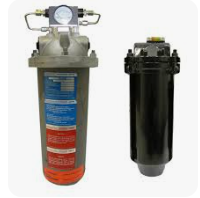
Fuel Is Never As Clean As You Think
To understand the importance of this filter, you first need to realize that the fuel arriving in your tank is not as clean as you might think. Between the refinery, tanker trucks, service station storage tanks, and finally your own tank, fuel accumulates impurities at every stage. Rust gradually flakes off metal walls, condensation forms water at the bottom of storage tanks, and microscopic suspended particles travel through the entire circuit. Without filtration, all of this would end up directly in your injectors and cause irreversible damage within just a few thousand kilometres.
Micron-Level Filtration
Modern fuel filters are designed to retain extremely fine particles, often in the range of two to ten microns depending on the application. To put that in perspective, a human hair measures about seventy microns in diameter. This filtration fineness is necessary because injector orifices are of a similar calibre, and any particle that reaches them can either block them or progressively erode them until their internal geometry is deformed. Once the geometry is altered, atomization becomes irregular and combustion loses efficiency, triggering a cascade of mechanical problems.
The Special Case of Diesel Filters
Diesel fuel filters have an additional critical function: separating water from diesel fuel. Water is a formidable enemy for high-pressure injection systems, particularly common rail systems that operate at several thousand bars. A water droplet in the wrong place can cause instantaneous corrosion of moving parts, or even a hydraulic lock with serious consequences. Modern diesel filters therefore incorporate a water separator with a settling bowl that must be drained regularly. This simple operation, often forgotten, can prevent repairs costing several thousand dollars.
Recognizing a Failing Fuel Filter
The signs of a failing fuel filter are often confused with other breakdowns, which sometimes leads to incorrect diagnoses and unnecessary costly repairs. Difficult starting, especially when cold, is one of the first symptoms to watch for. Progressive power loss, particularly at high rpm or on hills, is also revealing. In more advanced cases, the engine may hesitate, stall at idle, or even refuse to start completely. Before suspecting a major failure such as a failing injection pump or dead injectors, it’s always wise to check the condition of the fuel filter first.
Recommended Replacement Frequency
Replacement frequency varies depending on the vehicle type and the quality of fuel available in your region. Manufacturers generally recommend replacement every 60,000 to 80,000 kilometres for gasoline vehicles, and every 30,000 to 60,000 kilometres for diesel. However, these intervals assume consistently high-quality fuel. If you regularly fill up at low-traffic stations or have previously experienced contaminated fuel, it’s better to shorten these intervals significantly. More frequent replacement is a negligible cost compared to the risks avoided.
Choosing a Filter for Modern Engines
Choosing a quality fuel filter is particularly important for modern engines equipped with direct injection or common rail systems. A budget filter may allow oversized particles through, or worse, shed its own fibres into the circuit when it becomes saturated. Some economy filters use a media that degrades when in contact with fuels containing modern additives such as biofuels, causing premature clogging and sometimes unexpected chemical reactions. Reputable manufacturers invest in synthetic media specifically designed to resist these new fuel formulations.
Don’t Delay the Replacement
One often-overlooked point concerns the replacement itself. On some vehicles, the fuel filter is located under the floor or in a difficult-to-access location, which leads some owners to postpone this service indefinitely. That’s a false economy that can backfire. An injector damaged by a saturated filter can cost ten or twenty times the price of a preventive replacement. On some engines, replacing a full set of injectors including labour can easily exceed $2,000 — a considerable sum for something that could have been avoided with a simple scheduled maintenance.
Installation Quality Also Matters
It’s also important to mention the quality of the installation itself. A correctly installed filter must be perfectly sealed, with all gaskets in good condition and properly positioned. Even a minor leak can introduce air into the circuit, disrupt fuel delivery, and create erratic starts. After each replacement, it is recommended to fully prime the circuit according to the manufacturer’s instructions. On diesel engines, this priming is essential and sometimes requires a specific procedure with the ignition key held in the intermediate position through several successive cycles.
Fuel Additives: A Good Idea?
The use of fuel additives is a recurring debate among vehicle owners. Some products promise to clean injectors and improve combustion, but their effectiveness varies greatly depending on their formulation. Quality additives, used occasionally, can effectively maintain circuit cleanliness between major services. On the other hand, miracle products sold at bargain prices are rarely effective and can even accelerate filter clogging. The best approach is to rely on products recommended by the manufacturer or validated by recognized independent organizations.
At superfilter.top, we always emphasize the importance of regular fuel filter maintenance, as it is one of the best value-for-money interventions you can make to preserve your vehicle’s mechanics over the long term. A few dozen dollars every two or three years protects an injection system that may be worth several thousand. This simple logic should be enough to convince any vehicle owner to include fuel filter replacement in their maintenance routine, just like oil changes or brake checks. The peace of mind that comes from it is priceless.
Looking for the right filter for your vehicle?
SuperFilter.top lists over 10,000 cross-references — all major brands, completely free.